


概况
With the advancement of power grid technology and the rapid development of the Internet and the Internet of Things, emerging high-tech industries increasingly rely on Electrical Automation Technology. This field integrates the production, installation, commissioning, and maintenance of electrical equipment; the production, installation, and technological upgrading of automatic control systems; as well as the marketing and technical services of electrical equipment and automation products. The program cultivates high-quality skilled professionals with strong innovation ability and professional competence, capable of engaging in the production, installation, commissioning, operation and maintenance, and marketing of electrical equipment and automatic control systems in industries such as power, machinery, and construction.
Why Choose Electrical Automation Technology (Associate Degree)?
- Broad Development Prospects. With the rapid development of China’s economy, the widespread application of modern electrical equipment, the increasing level of electrical automation, and advances in industrial robotics and artificial intelligence, there is a strong demand for professionals in this field. For a considerable period in the future, the societal demand for skilled talents in Electrical Automation Technology is expected to continue rising.
- Advanced Open Laboratories. This program is equipped with 11 specialized laboratories, including the Power Drive Laboratory and the PLC Comprehensive Laboratory, as well as three open experimental centers: the Undergraduate Innovation and Entrepreneurship Center, the Robotics Laboratory, and the Geek Exploration Laboratory. These facilities provide excellent technical conditions for students to conduct experiments and hands-on practice, enhancing their practical skills.
- Outstanding Teaching Team. The program has multiple ”dual-qualified” faculty members with rich industry experience, as well as many excellent teachers who graduated from double first class universities in China or have overseas study experience.
- Innovative Practical Teaching Model. The program adheres to an integrated theory-and-practice teaching system, implementing a progressive, multi-level approach to practical training. It establishes a student-centered, “skill-project-based” model to cultivate specialized skills, enabling students to acquire essential, comprehensive, and systematic technical abilities through hands-on practice.
Basic Information
- School School of Intelligent Manufacturing and Mechatronic
- Study Mode Full-time
- Program Length 3 years
Knowledge and Skills
- Proficiently master the basic theories and professional knowledge in the field of automation technology, and possess corresponding practical skills, enabling graduates to engage in the application, installation, commissioning, maintenance, sales, management, and design of automation products in industries such as power, machinery, and construction.
- Competently apply professional knowledge in the field, becoming high-quality, application-oriented technical talents capable of adapting to production and management needs.
- Possess strong professional oral and written communication skills, as well as basic abilities in project participation and team management.
Message from the Program Director
“If you are interested in cutting-edge technologies such as artificial intelligence, robotics, and the Internet of Things, we warmly welcome you to study in the Electrical Automation Technology program. Here, you will learn about electrical design and commissioning, production and technological upgrading of automatic control systems, as well as marketing and technical services for automation products. We are here to help you become a skilled professional in Electrical Automation Technology. Qingdao City University looks forward to having you join us!”
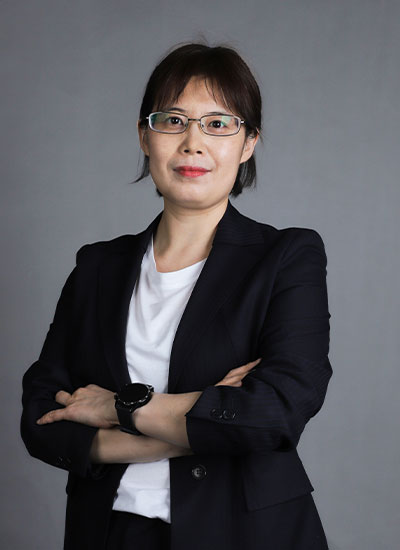 Cui Wang
Curriculum Structure
- First Academic Year
-
The first year mainly consists of general education courses.
- Engineering Mathematics
- Electronic Technology
- International Cutting-edge New Technology Frontie
- Engineering Drawing
- Fundamentals of Electronic technique
- Second Academic Year
-
- Intelligent Manufacturing Technology
- Motors and Drives
- Principles of Automatic Control
- Factory Power Supply Technology
- Sensor and Measurement Technology
- MCU Control Technology
- Fundamentals of Programming (C)
- EPLAN Electrical Design
- Electrical Control and PLC
- Power Electronics Technology
- Electrical CAD
- Fundamentals of Electronic Design
- Basics of Robotics
- Technical English for Electrical Engineering
- Artificial Intelligence Technology
- MATLAB Technology and Applications
- Computer Control Technology
- Power System Analysis
- Fundamentals of Semiconductor Manufacturing Equipment
- Intelligent Manufacturing Skills Lab
- Electrical Skills Lab
- Electronics Skills Lab
- Third Academic Year
-
- Industrial Robot Programming and Commissioning
- Innovative Design of Electronic Products
- Variable Frequency and Servo Drives
- Industrial Networks and Configuration Technology
- Automatic Speed Regulation Systems
- New Energy Technology
- Signals and Systems
- Principles and Applications of Embedded Systems
- Power System Relay Protection Simulation
- Integrated Circuit Manufacturing Technology
- Assembly and Commissioning Lab of Automated Production Lines
- 3D Printing Lab
- Intelligent Innovation Lab
Career Prospects
Graduates of this program are highly regarded for their solid professional foundation, strong practical skills, evident innovative mindset, and overall high-quality competencies. They have established an excellent reputation in well-known companies such as the State Grid Corporation of China, Inspur Group Co., Ltd., the Metrology Institute of the Quality Supervision Bureau, BYD Co., Ltd., and Qingdao TGOOD Electric Co., Ltd. According to follow-up surveys, employers are very satisfied with the graduates’innovation abilities and practical application skills. Graduates may also choose to pursue a bachelor’s degree in fields such as electrical engineering.